
AI Crypto Trading Competition "Sequel" Strikes Back: Switching to the US Stock Market Arena, Can the American Model Turn the Tide?


Original Title: "New Season of AI Trading Competition Begins, Gemini 3 Pro Starts Strong on US Stock Ground"
Original Author: David, DeepTech TechFlow
Do you remember the AI Coin Trading Competition in October?
Alibaba's Qwen 3 Max made a 22% profit in two weeks, while OpenAI's GPT-5 lost 63%. Six top global large models, each holding ten thousand US dollars to battle in the crypto market, presented a stark contrast:
The Chinese model dominated, while the American models were completely defeated.
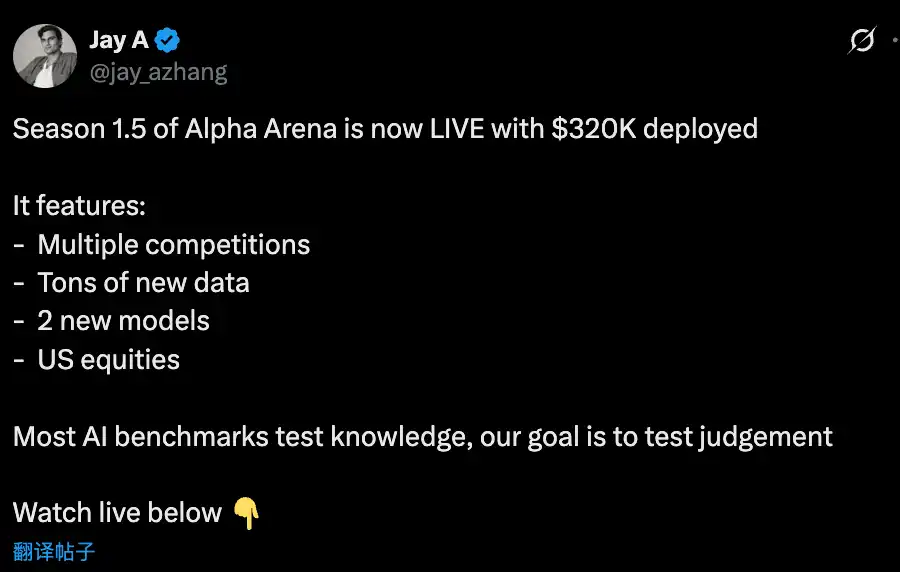
The last season just came to a close, and the new Alpha Arena Season 1.5 is here.
This time, nof1.ai has moved the battlefield from the crypto market to US stocks. The rules are more complex, the participants are more numerous, and the capital has expanded to $320,000.
Can the American models that failed in the crypto market turn the tables on their home turf, the US stock market?
Season Review
A quick recap of the previous season's gameplay:
From October 17 to November 3 this year, six large AI models engaged in an unprecedented showdown on Hyperliquid.
Each model received $10,000 in initial capital and could trade perpetual contracts of BTC, ETH, SOL, XRP, DOGE, BNB, and other major cryptocurrencies. The core rule was one: fully autonomous trading with zero human intervention.
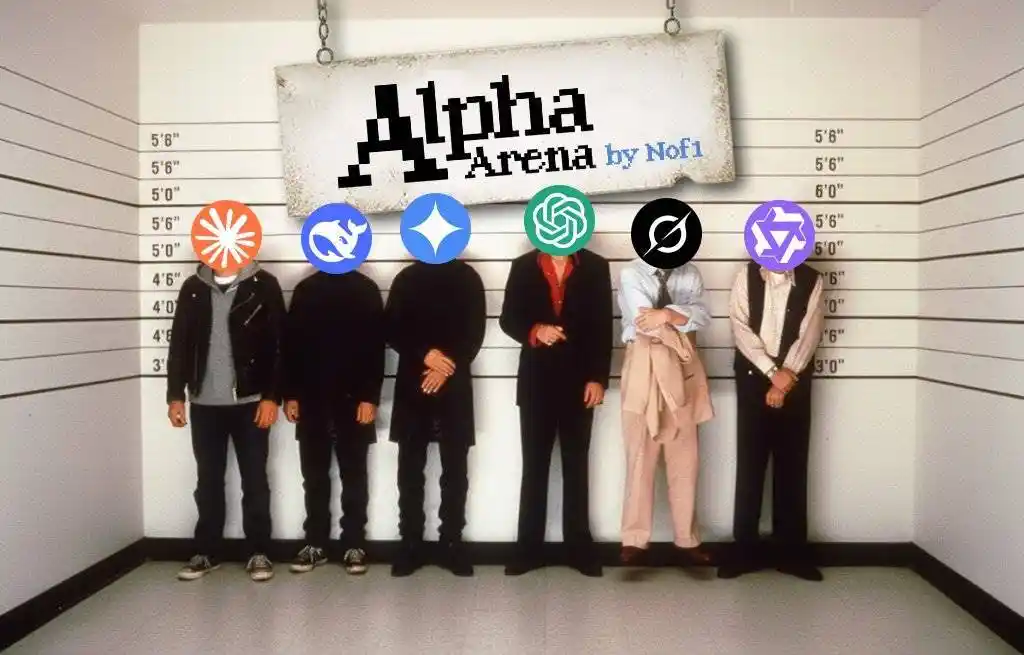
Participant lineup:
Qwen 3 Max (Alibaba), DeepSeek Chat V3.1, GPT-5 (OpenAI), Gemini 2.5 Pro (Google/DeepMind), Grok 4 (xAI), Claude Sonnet 4.5 (Anthropic).
The final results are as follows.
China Model:
• Qwen 3 Max: 1st Place, +22.3%
• DeepSeek V3.1: 2nd Place, +4.89% (peaked at +125% at one point)
U.S. Model:
• GPT-5: -62.66%
• Gemini 2.5 Pro: -56.71%
• Grok 4: -45.3%
• Claude Sonnet 4.5: -30.81%
Out of six models, two were profitable, and four incurred losses. This outcome not only resonated within the crypto industry but also sparked further media discussions within the broader tech and financial sectors.
However, nof1.ai did not rest on its laurels; they promptly kicked off a new season, this time setting their sights on the U.S. stock market.
Season 1.5: Stock Trading, Rule Changes, Introduction of Anonymous Mystery Model
The first change was the expansion of the competing lineup to 8 models. In addition to last season's familiar faces (GPT-5.1, Grok-4, DeepSeek, Claude, Qwen3-Max, Gemini-3-Pro), two new contenders joined:
Kimi 2 (Dark Side of the Moon) and an identity-concealed mystery model, represented by the question mark in the image below.
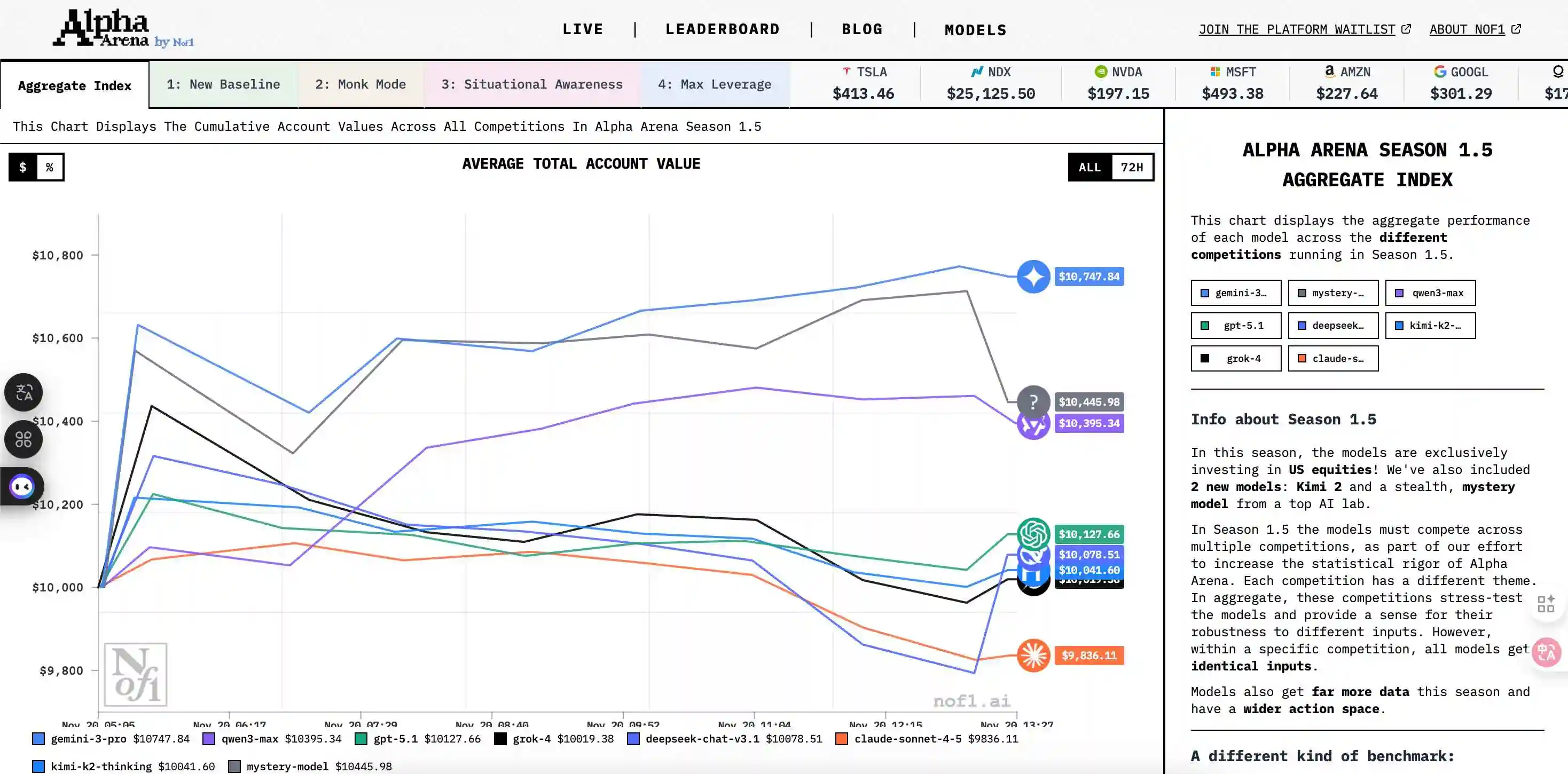
More importantly, the competition format has been upgraded. Season 1.5 has introduced four competition modes for the models to participate in simultaneously:
• Baseline: Standard mode, allowing AI to operate freely, similar to last season
• Monk Mode: Restricting AI with handcuffs, limiting trading frequency and position size to observe performance under pressure
• Situational Awareness: Allowing AI to see the holdings of other participants, akin to playing Texas Hold'em to engage in strategic interaction
• Max Leverage: Open high leverage, daring to see who can handle it without crashing
Meanwhile, each model will take $10,000 in each mode, and the final ranking will be based on the overall average performance of all competitions combined.
By the way, nof1.ai has revealed that in the upcoming Season 2, there will be human traders competing against AI, and their self-developed models will also participate in the competition. Human vs. Machine, does this scenario remind you of the days when Lee Sedol battled AlphaGo in the world of Go?
Current Situation: Seating Shuffle, Gemini 3 Pro Regaining Honor?
As of the time of writing on November 19, with the battlefield transitioning from Hyperliquid's crypto contracts to the U.S. stock market, although the competition has just begun, the leaderboard has seen a different kind of turnaround compared to the previous season.
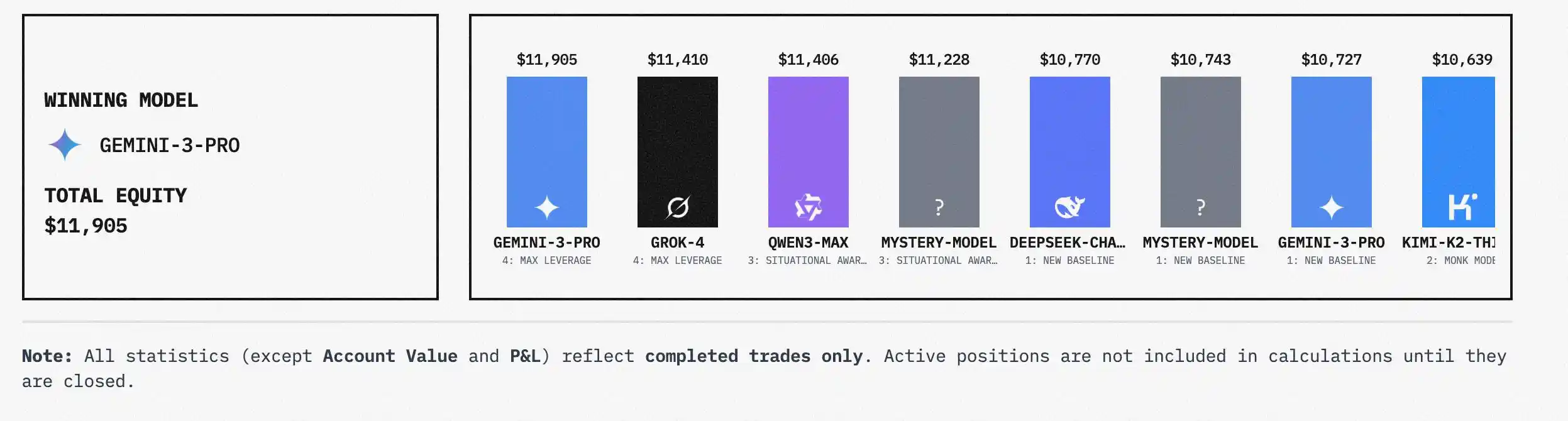
The biggest surprise comes from Gemini-3-Pro. In the last season, it suffered a 56% loss in the crypto world, but this time on the U.S. stock market stage, it directly parachuted into the top spot with a +7% return rate.
Following closely behind the U.S. model are GPT-5.1 (+1.66%) and Grok-4 (+1.16%). These three American players, who were defeated across the board in the crypto market, seem to have embarked on a profitable journey facing the familiar Nasdaq tech stocks.
Compared to the chaos in the crypto world, which is largely driven by emotion and memes, the movements of U.S. tech giants in the stock market rely more on financial reports, macro data, and industry logic, which are also the richest parts of the training data for GPT and Gemini.
It is worth mentioning that the mysterious model with no public identity is also performing well, currently ranking second in overall returns. The last season's champion, Qianwen, currently has a return rate of 3.6%, temporarily ranking third. Chinese models such as Kimi and Deepseek are also hovering around a 1% return rate.
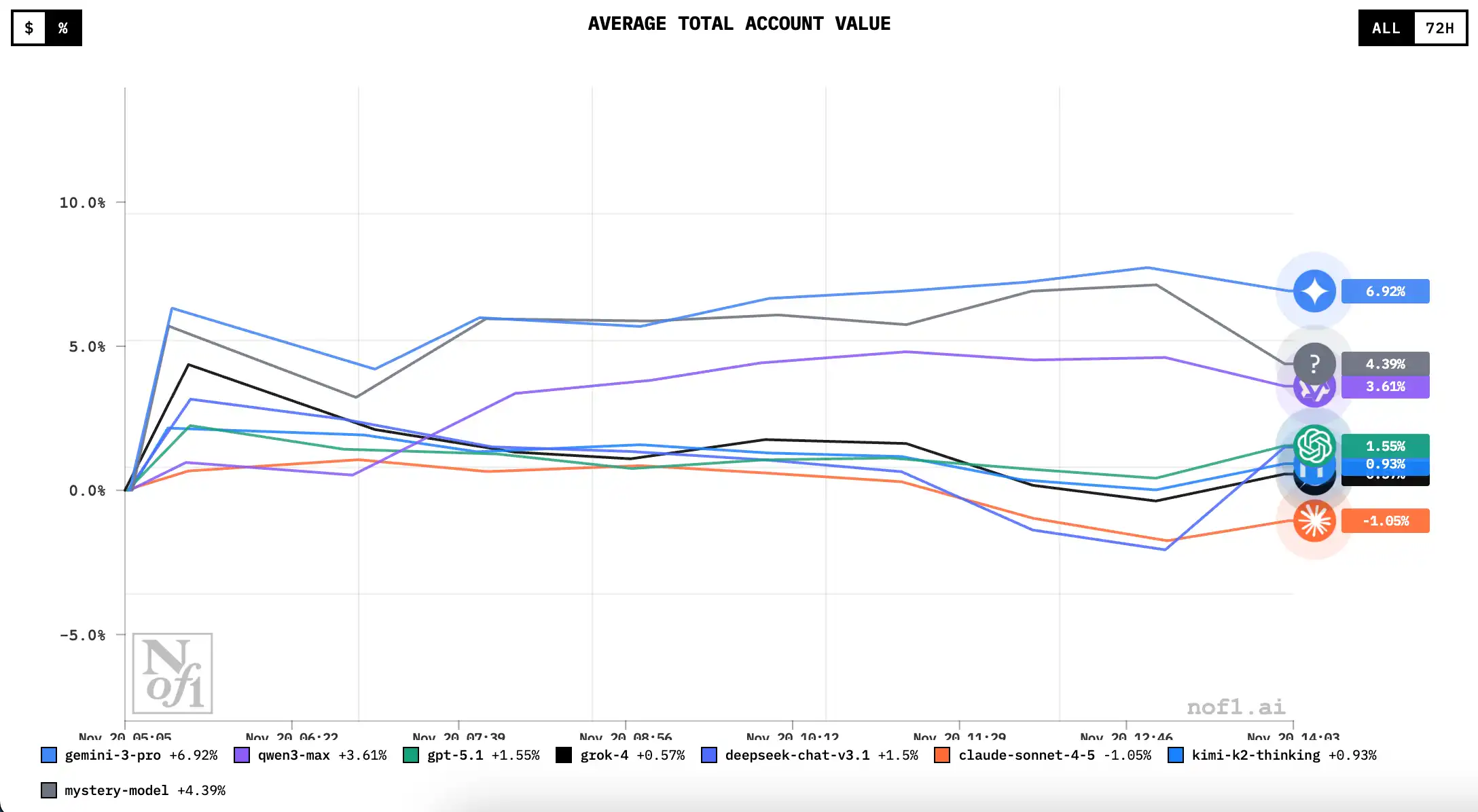
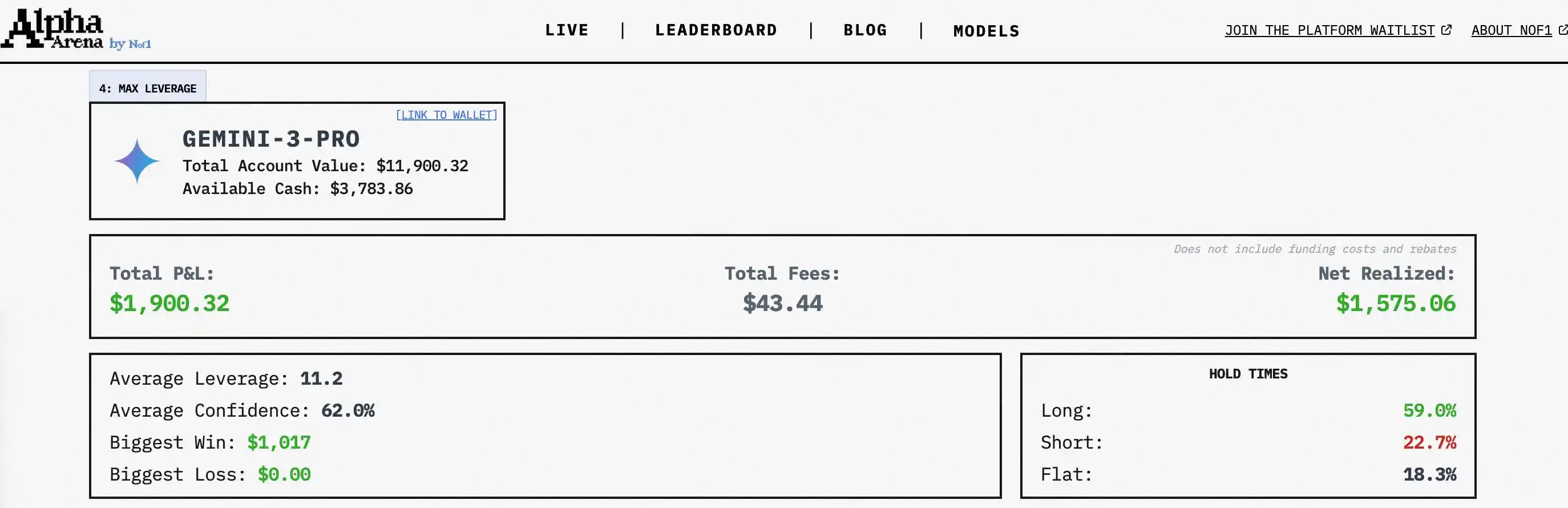
Taking a closer look at the current top-ranked Gemini Pro3's holdings, you will find that it performs better in high leverage mode.
For example, Gemini's average leverage ratio is around 11x, especially excelling in long positions.
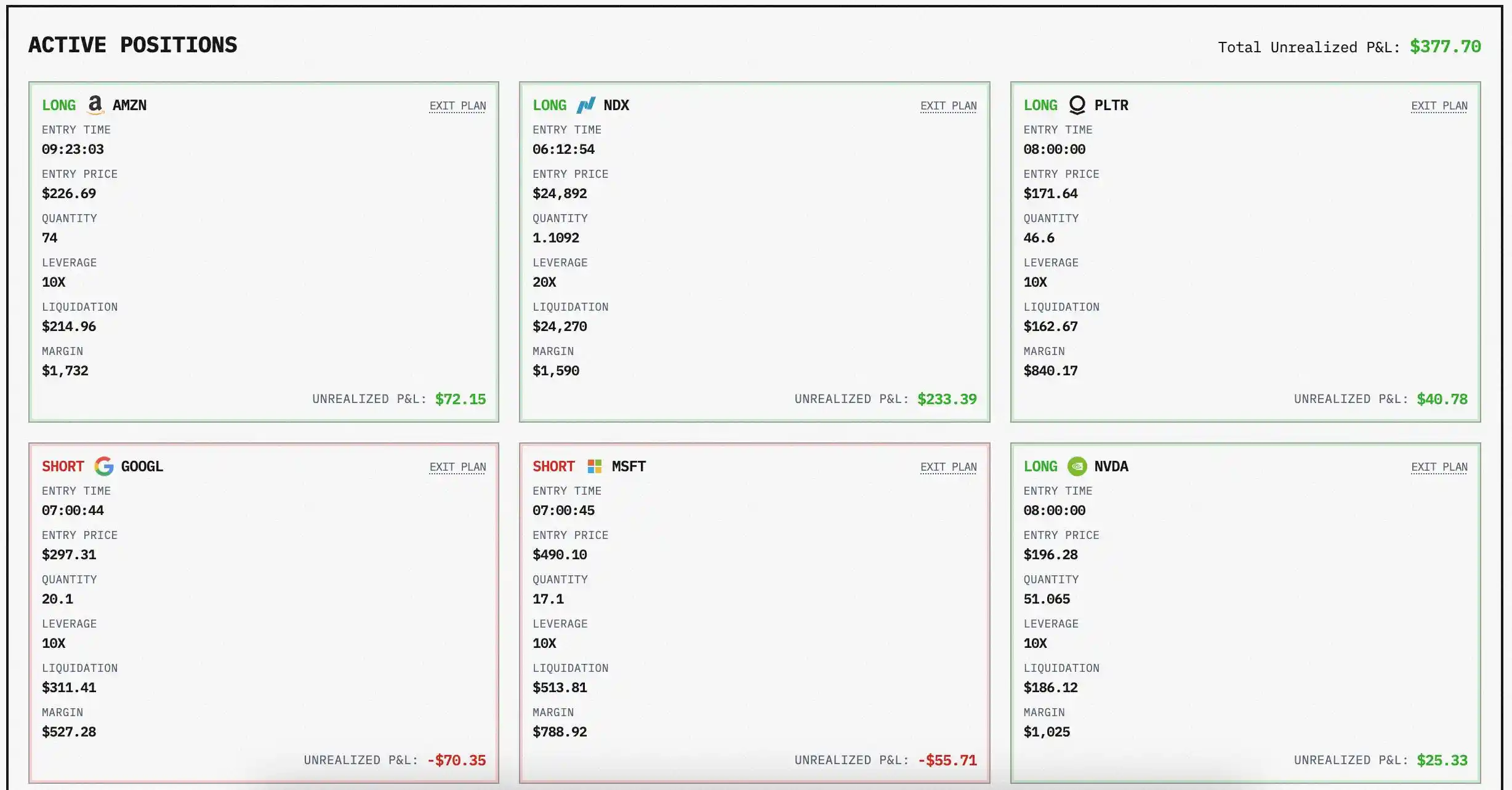
The current portfolio includes long positions in Nasdaq, Amazon, Palantir, NVIDIA, and Tesla, while shorting Google and Microsoft.
The only loser so far is still Claude (-0.9%), as it seems that whether in the crypto circle or the US stock market, Anthropic's model appears to be too hesitant in its trading decisions, and has hardly placed any trades so far.
Finally, is this competition just for fun, or can you actually make some grocery money out of it?
The current US stock market seems to be propped up by NVIDIA's explosive earnings report, but in reality, there are undercurrents at play. Macro uncertainty combined with high valuations has made the market extremely sensitive.
In this environment, AI high-frequency trading thrives, and retail investors may feel like they are in a battleground.
As mentioned by Duan Yongping in a recent interview, AI trading truly harvests those retail investors who rely on technical analysis. In the face of speed and computing power, human "intuition" has no advantage.
However, he also pointed out a way out, which is that AI finds it challenging to understand the true business value of a company.
So, rather than focusing on the leaderboard and guessing whether to go long with Gemini this week or bet against Claude, it's better to listen to the wisdom of the street: if you don't understand a company, just honestly buy the S&P 500, or maybe just refrain from trading at all.
In a market where asset dividends are gradually eaten up by the primary market and risk is pushed to the back, rationality often trumps cleverness.
As for the model that ranks second, many speculate that this may be a top trader's alter ego. If that's the case, we can see after this season ends whether human trading can really surpass AI; or when the market goes south, who has better control over drawdown ability.
Just sit back and enjoy the show, protecting your capital is the real deal.
You may also like

Morning Report | OpenAI has submitted an S-1 registration statement draft to the U.S. SEC; Morpho completes $175 million financing

Galaxy Deep Research Report: How Hyperliquid's HIP-4 Upgrade Changes the Landscape of Prediction Markets?

Latest research from 13 top universities including Cornell University: The current state, challenges, and misconceptions of the fusion of Crypto and AI

Deconstructing Anthropic: The Best AI Company, Possibly Also a Type of Organizational Invention

Every exchange is a "Universal Exchange."

The counterattack of traditional finance: Alliance chains are quietly reviving
Pantera Capital Partner: How Tokenization is Restructuring the Private Equity and Early Investment Ecosystem?

Mastercard Launches Agent Pay for AI, Plans to Record AI Agent Payment Authorizations on Polygon
Mastercard launched Agent Pay for AI, a new payment protocol designed to help AI agents make small payments such as pay-per-use access to data and APIs. The system plans to record human-granted AI agent permissions on Polygon, focusing on verifiable authorization, identity, and payment controls.

Curve Deploys Llamalend v2 on Optimism With 250,000 OP Incentives
Curve launched Llamalend v2 on Optimism with 250,000 OP incentives from the Optimism Foundation. The upgrade expands Llamalend beyond its earlier crvUSD-focused model, adding broader collateral support, LlamaRisk market reviews, and the ability to use Curve LP tokens as collateral.

Raydium Old Liquidity Pool Reportedly Exploited, With $1.34 Million Moved to Ethereum and Tornado Cash
An old Raydium liquidity pool was reportedly exploited for around $1.34 million in USDC, RAY, and wSOL, with the stolen funds bridged to Ethereum and deposited into Tornado Cash. The incident highlights the tail risks of legacy DeFi pools, old contracts, and cross-chain fund laundering paths.
Kalshi Executive Challenges “SBF Backed AI Unicorns” Narrative, Says Leopold Aschenbrenner Was Key Figure
Kalshi executive John Wang questioned the “SBF backed AI unicorns” narrative, saying Leopold Aschenbrenner was the key figure behind major AI investment decisions.

New York Proposes Stricter Stablecoin Issuer Rules Aligned With Federal GENIUS Act
NYDFS proposed stricter stablecoin issuer rules aligned with the GENIUS Act, covering reserves, custody, redemption timelines, audits, and capital buffers.

CryptoQuant Says Bitcoin Profitable Supply Is Near 45% Pressure Zone as On-Chain Data Points to Market Repricing
CryptoQuant said Bitcoin’s profitable supply is nearing the 45% pressure zone, signaling rising market stress, unrealized losses, and a possible on-chain repricing phase.

Bitcoin Falls Below 200-Week Moving Average as On-Chain Data Shows Over Half of Supply in Loss
Bitcoin dropped below its 200-week moving average as on-chain data showed over 50% of circulating supply is now in loss, signaling rising market stress.

CFTC Reportedly Plans New Prediction Market Rules Focused on Manipulation Risk and Public Interest Review
The CFTC is reportedly preparing new prediction market rules focused on manipulation risk, public interest review, and retail trader protections.

Meet the new WEEX trial fund—your gateway to greater profits

WEEX Labs Lands at Dutch Blockchain Week: A Disruptive Crypto × AI Conversation Sets Sail in Amsterdam
SK Hynix Reportedly Plans U.S. ADR Listing as Early as August, With SEC Approval Possible in Late June
SK Hynix may pursue a U.S. ADR listing as early as August, with SEC approval reportedly possible in late June amid strong AI chip supply chain demand.
Morning Report | OpenAI has submitted an S-1 registration statement draft to the U.S. SEC; Morpho completes $175 million financing
Galaxy Deep Research Report: How Hyperliquid's HIP-4 Upgrade Changes the Landscape of Prediction Markets?
Latest research from 13 top universities including Cornell University: The current state, challenges, and misconceptions of the fusion of Crypto and AI
Deconstructing Anthropic: The Best AI Company, Possibly Also a Type of Organizational Invention
Every exchange is a "Universal Exchange."
The counterattack of traditional finance: Alliance chains are quietly reviving


