
Bitcoin Preemptively "Surrenders," Market Quietly Awaits Nvidia's Earnings Report


Original Title: "Bitcoin Surrenders Early, Market Awaits NVIDIA's 'Performance'"
Original Author: Bootly, BitpushNews via Bitpush
Ahead of NVIDIA's earnings report announcement, global risk assets have already reacted: sentiment has shifted from panic to "stampede" panic.
On Tuesday, the Dow Jones Index fell by 499 points, a 1.07% drop; the S&P 500 saw a four-day decline, marking its longest losing streak since August; the Nasdaq, since hitting a historic high in October, has now cumulatively dropped by over 6%, wiping out approximately $2.6 trillion in market value.
The cryptocurrency market, seen as a risk-on asset barometer, underwent a "bloodbath": Bitcoin dropped below $90,000 in the short term for the first time in seven months; Ethereum fell below the $3,000 integer mark.

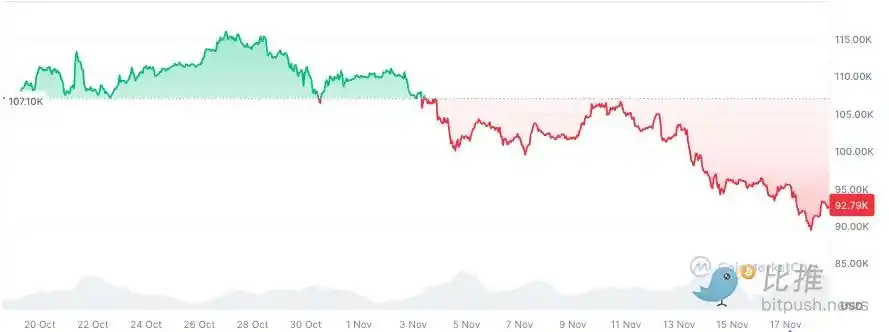
Behind the synchronized sharp decline in the U.S. stock and cryptocurrency markets, investors are experiencing a dual "shock" of panic over the "AI bubble" and uncertainty about the Federal Reserve's monetary policy.
Prior to NVIDIA's Earnings Report, AI Bubble Discussion Reaches a Peak
This time, the stock market's decline is closely related to the AI topic.
Earlier today, NVIDIA and Microsoft announced plans to invest up to tens of billions of dollars in Anthropic, aimed at the next round of computing power competition. This was supposed to be a bullish piece of news symbolizing future industry growth momentum but it barely uplifted the market.
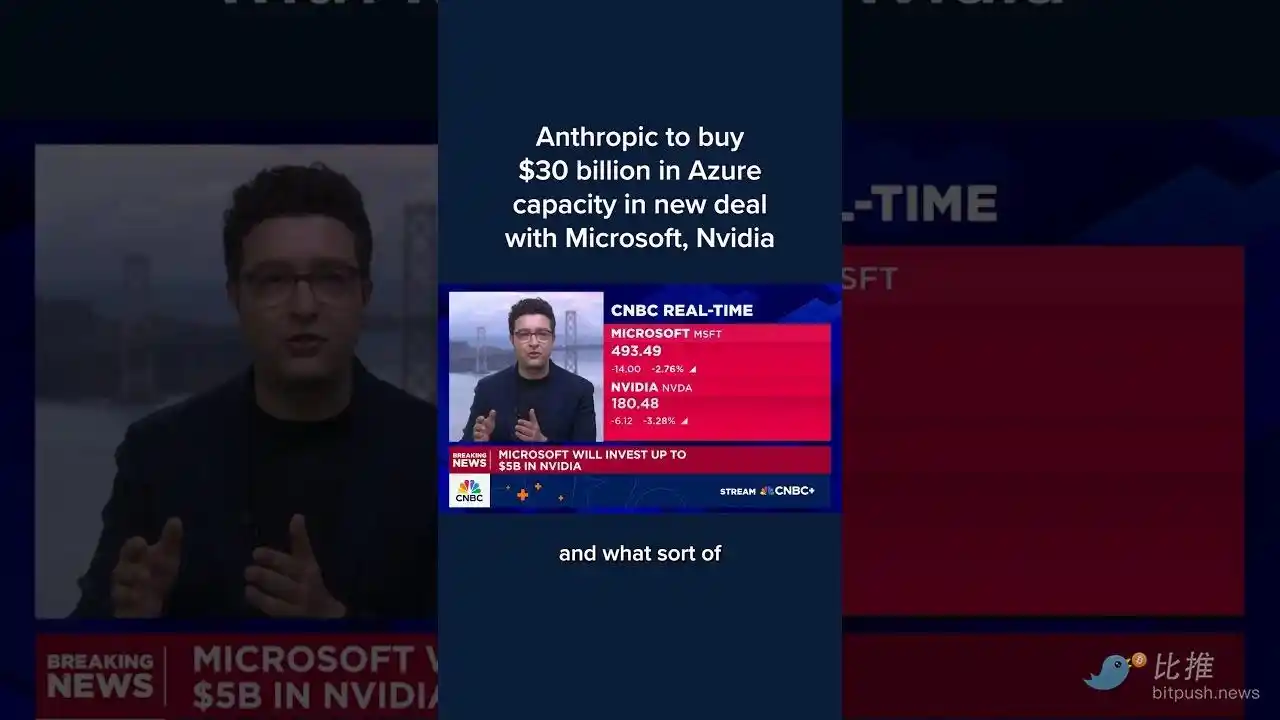
Over the past half year, the investment of major tech companies in AI infrastructure has shown exponential growth—data center construction, energy expansion, GPU procurement, all in the hundreds of billions of dollars. NVIDIA's market cap had once soared to $5 trillion, and the weight of AI companies in the S&P 500 is rapidly approaching one-third.
This has also made the voices in the market warning that the "bubble is accelerating" become more piercing.
During an interview with the BBC, Sundar Pichai, CEO of Alphabet, Google's parent company, pointed out that the current AI frenzy has an "irrational element." He cautioned, "If the AI bubble bursts, no company can stand alone, including us."

Wharton School Professor Jeremy Siegel stated this week in a Bloomberg TV interview: "AI is revolutionary, but that doesn't mean valuations can detach from fundamentals."
This statement somewhat epitomizes investors' current conflicting emotions: they are unwaveringly bullish on AI's future, but they also worry that the past year's surge may have priced in too much of the future growth.
Therefore, ahead of NVIDIA's earnings report, some funds have chosen to retreat first, reassessing the risk-reward ratio of the AI sector.
Carson Group's Global Macro Strategist Sonu Varghese pointed out in his analysis report: "The tech sector has been surging throughout the year, so it's not surprising to see volatility. The tech stock volatility is further exacerbated by concentrated risks—both in index composition and investor holdings. Despite the significant gains, investors heavily allocated to AI-related stocks are always on thin ice, as any pullback could trigger a chain reaction. What's more severe is that when stock prices start to fall, a large number of investors simultaneously seeking risk diversification may, in turn, intensify market turmoil."
Macroeconomic Variables: Missing Data About to Be Replenished, but Rate Outlook Remains the Greatest Uncertainty
Previously missing key economic data due to the government shutdown is rapidly being restored. The U.S. Department of Labor has confirmed that it will replenish all missing weekly initial jobless claims data by this Thursday and will retroactively release September PPI and Import-Export Price Indices on November 25 and December 3, respectively.

However, the market's core anxiety lies not in the "data's absence" but in: what interest rate path will the data point to after replenishment?
According to the CME FedWatch tool (as of November 19 Beijing time): the probability of a 25-basis-point rate cut by the Fed in December is 48.9%, with the probability of no change at 51.1%.
In other words, the market's expectations for a recent rate cut are almost evenly split, making rate expectations particularly sensitive and fragile.
Tech stocks and cryptocurrencies belong to asset categories that rely on high valuations and strong growth expectations, making them extremely sensitive to interest rate changes. If the upcoming data reinforces the narrative of "inflation remaining sticky" or "labor market resilience exceeding expectations," leading to a further delay in rate cut expectations, then the pressure of liquidity tightening will continue to loom over risk assets.
Industry Insiders: Is It a 'Deep Pullback' or a 'Perfect Bottom'?
Over the past few years, the correlation between Bitcoin and U.S. tech stocks, especially the Nasdaq 100 Index, has continued to strengthen. The latest data shows that the 30-day correlation between Bitcoin and the Nasdaq has reached around 0.80, hitting a new high since 2022.
Industry insiders generally believe that Bitcoin's performance is increasingly resembling a "leveraged tech stock," surging in a bull market, being sold off in sync during risk-off sentiment spikes, and experiencing amplified declines.
· Faced with Bitcoin's pullback, opinions among crypto industry professionals are divided:
· Long-term Profit Taking: Analysts such as Gerry O'Shea from Hashdex Asset Management believe that Bitcoin's struggle is partly due to long-term holders taking profits, capitalizing on significant gains in recent years.
Technical Warning: Alex Kuptsikevich, Chief Market Analyst at FxPro, pointed out that Bitcoin breaking below the 50-week moving average confirms the rupture of the two-year bull market trend. His scenario predicts that Bitcoin may further decline to the 200-week moving average (around the $60,000 to $70,000 range).
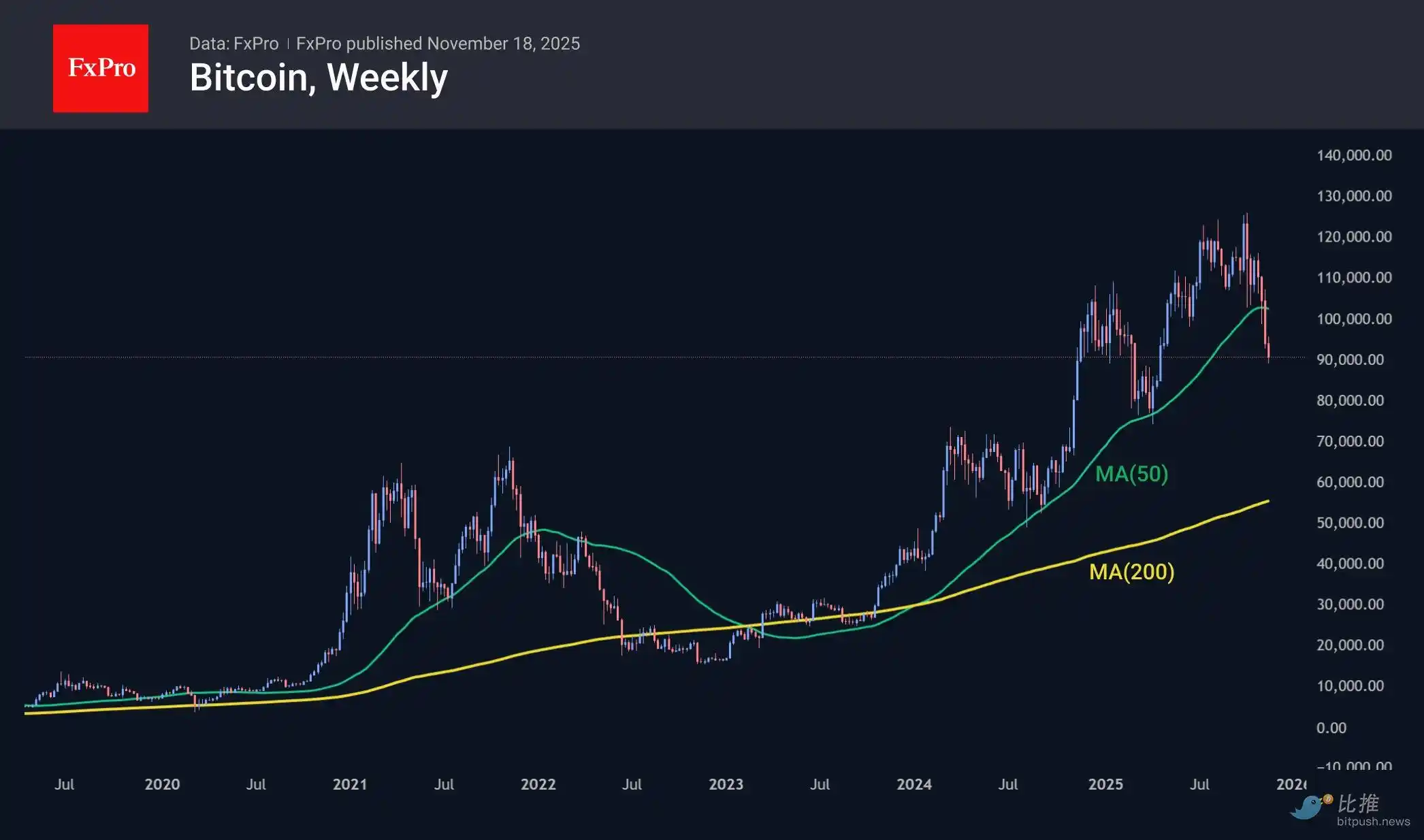
· 'Extreme Fear' Signal: The sentiment index from CoinMarketCap indicates that current crypto investors are in a state of 'extreme fear.' However, Haider Rafique, Managing Partner at OKX Global, believes that the market's performance in the coming days will determine whether this is just a 'sharp, temporary pullback' or will evolve into 'a deeper reset.'
· Optimists Call for Entry: Optimists like Ryan Rasmussen from Bitwise Asset Management still maintain a positive outlook, viewing the market's 'fear' extremes as the 'perfect opportunity' for investors to build existing positions or enter the market. Geoffrey Kendrick, Director of Digital Asset Research at Standard Chartered, stated in a recent research report that the current Bitcoin pullback is a healthy adjustment within the cycle, and if it can hold around the $100,000 region, Bitcoin will establish a new structural support.
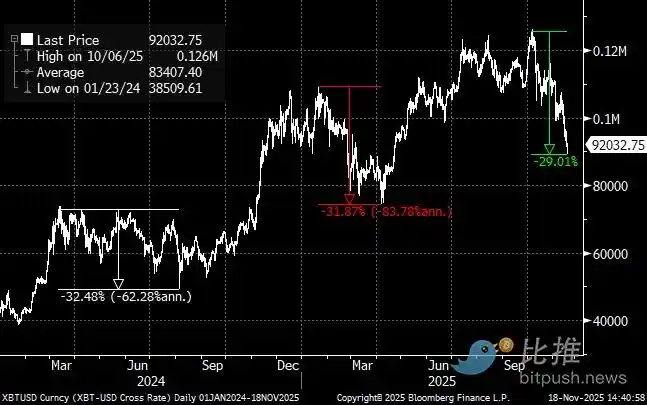
In summary, the current market is in a typical 'wait-and-see' phase. It is advised for investors to control their positions, avoid chasing highs or panic selling, and expect short-term or sustained weak consolidation in tech stocks and crypto assets. The market is waiting for new anchor points, including fundamental data, policy signals, and AI narrative validation. Until then, risk assets will undergo a more restrained consolidation phase.
You may also like

Morning Report | OpenAI has submitted an S-1 registration statement draft to the U.S. SEC; Morpho completes $175 million financing

Galaxy Deep Research Report: How Hyperliquid's HIP-4 Upgrade Changes the Landscape of Prediction Markets?

Latest research from 13 top universities including Cornell University: The current state, challenges, and misconceptions of the fusion of Crypto and AI

Deconstructing Anthropic: The Best AI Company, Possibly Also a Type of Organizational Invention

Every exchange is a "Universal Exchange."

The counterattack of traditional finance: Alliance chains are quietly reviving
Pantera Capital Partner: How Tokenization is Restructuring the Private Equity and Early Investment Ecosystem?

Mastercard Launches Agent Pay for AI, Plans to Record AI Agent Payment Authorizations on Polygon
Mastercard launched Agent Pay for AI, a new payment protocol designed to help AI agents make small payments such as pay-per-use access to data and APIs. The system plans to record human-granted AI agent permissions on Polygon, focusing on verifiable authorization, identity, and payment controls.

Curve Deploys Llamalend v2 on Optimism With 250,000 OP Incentives
Curve launched Llamalend v2 on Optimism with 250,000 OP incentives from the Optimism Foundation. The upgrade expands Llamalend beyond its earlier crvUSD-focused model, adding broader collateral support, LlamaRisk market reviews, and the ability to use Curve LP tokens as collateral.

Raydium Old Liquidity Pool Reportedly Exploited, With $1.34 Million Moved to Ethereum and Tornado Cash
An old Raydium liquidity pool was reportedly exploited for around $1.34 million in USDC, RAY, and wSOL, with the stolen funds bridged to Ethereum and deposited into Tornado Cash. The incident highlights the tail risks of legacy DeFi pools, old contracts, and cross-chain fund laundering paths.
Kalshi Executive Challenges “SBF Backed AI Unicorns” Narrative, Says Leopold Aschenbrenner Was Key Figure
Kalshi executive John Wang questioned the “SBF backed AI unicorns” narrative, saying Leopold Aschenbrenner was the key figure behind major AI investment decisions.

New York Proposes Stricter Stablecoin Issuer Rules Aligned With Federal GENIUS Act
NYDFS proposed stricter stablecoin issuer rules aligned with the GENIUS Act, covering reserves, custody, redemption timelines, audits, and capital buffers.

CryptoQuant Says Bitcoin Profitable Supply Is Near 45% Pressure Zone as On-Chain Data Points to Market Repricing
CryptoQuant said Bitcoin’s profitable supply is nearing the 45% pressure zone, signaling rising market stress, unrealized losses, and a possible on-chain repricing phase.

Bitcoin Falls Below 200-Week Moving Average as On-Chain Data Shows Over Half of Supply in Loss
Bitcoin dropped below its 200-week moving average as on-chain data showed over 50% of circulating supply is now in loss, signaling rising market stress.

CFTC Reportedly Plans New Prediction Market Rules Focused on Manipulation Risk and Public Interest Review
The CFTC is reportedly preparing new prediction market rules focused on manipulation risk, public interest review, and retail trader protections.

Meet the new WEEX trial fund—your gateway to greater profits

WEEX Labs Lands at Dutch Blockchain Week: A Disruptive Crypto × AI Conversation Sets Sail in Amsterdam
SK Hynix Reportedly Plans U.S. ADR Listing as Early as August, With SEC Approval Possible in Late June
SK Hynix may pursue a U.S. ADR listing as early as August, with SEC approval reportedly possible in late June amid strong AI chip supply chain demand.
Morning Report | OpenAI has submitted an S-1 registration statement draft to the U.S. SEC; Morpho completes $175 million financing
Galaxy Deep Research Report: How Hyperliquid's HIP-4 Upgrade Changes the Landscape of Prediction Markets?
Latest research from 13 top universities including Cornell University: The current state, challenges, and misconceptions of the fusion of Crypto and AI
Deconstructing Anthropic: The Best AI Company, Possibly Also a Type of Organizational Invention
Every exchange is a "Universal Exchange."
The counterattack of traditional finance: Alliance chains are quietly reviving


