
RWA Evergreen Product Crisis: Why is the GLP Model Doomed to Collapse Under RWA Evergreen?



Original Article Title: The Genesis Story: How Crypto Found Me
Original Article Author: @hmalviya9
Original Article Translation: zhouzhou, BlockBeats
Editor's Note: Although the usage of RWA perpetual products (such as Ostium) has seen a surge, the GLP liquidity model is unsustainable due to high funding rates, a zero-sum game between traders and LPs, a lack of hedging mechanisms, which have limited platform expansion. In contrast, HyperLiquid, utilizing a more flexible HLP model, has shown superior performance. In the future, for Ostium to achieve long-term healthy development, it may need to transition to an order book model to reduce costs and enhance market efficiency.
Below is the original content (slightly reorganized for better readability):
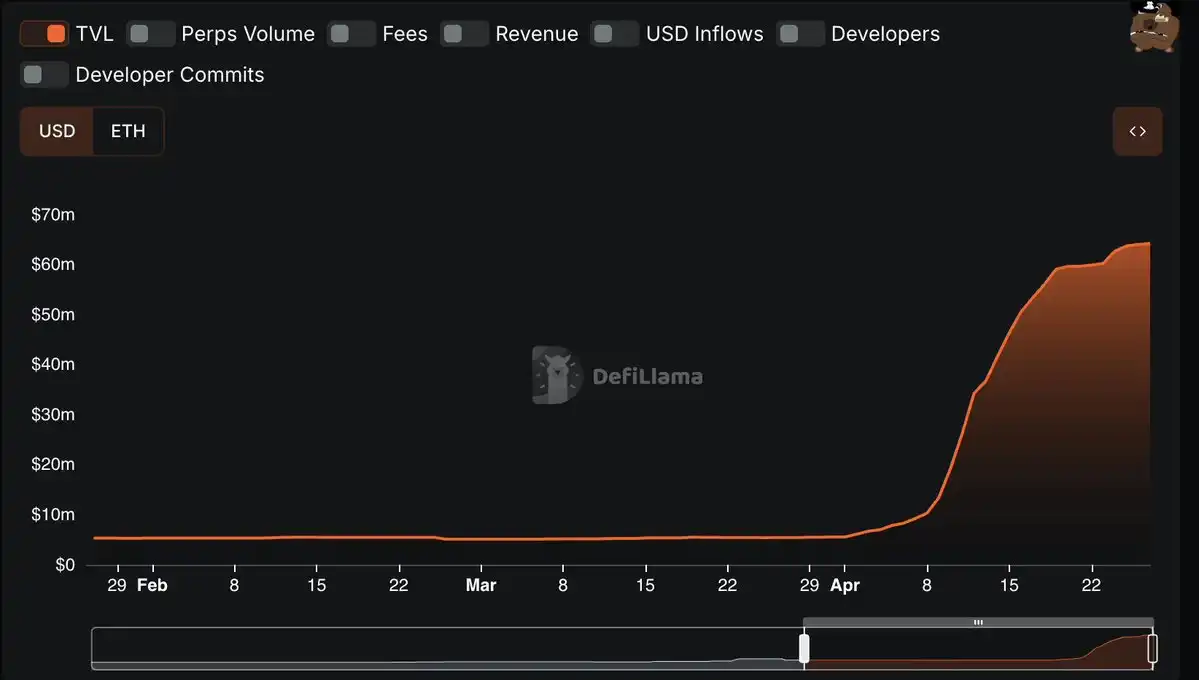
Over the past month, as the tariff crisis loomed, the currency market shook, and the stock market fluctuated like an electrocardiogram, the usage of RWA perpetual contracts has seen a remarkable growth. The total deposit volume of @OstiumLabs has skyrocketed from a stable level of less than 6 million USD to over 60 million USD in just one month. Trading volume has also seen a substantial increase. HyperLiquid has also launched a perpetual contract market for @Paxos' PAXG.
The demand to use crypto derivatives to long or short RWA has become very apparent. The question is, are the current solutions good enough? If not, how can they be improved?
Why Might These Solutions Not Be Good Enough?
In the introductory part, I mentioned two seemingly contradictory viewpoints: on one hand, traders are indeed using RWA products; on the other hand, I questioned whether the existing solutions are good enough.
Some may wonder, if users are choosing these platforms, doesn't it mean that the current RWA perpetual contracts are already good enough? But the reality is different. Let me explain through some data.
If we look at the funding rate on Ostium, we can see that the funding rate for the gold pair (XAU/USD) has reached as high as 30%, and it is still at 13% now.
In comparison, the funding rate for BTC on Bybit is approximately half of Ostium's, while the BTC funding rates on Binance and OKX are only about a quarter of Ostium's. Some may think this is because gold has performed better, but that is not necessarily the case.
Gold has risen by about 50% year to date, and Bitcoin has seen a similar increase.
Moreover, when we compare the crypto market with the traditional financial market (such as CME), the difference becomes even more apparent. If you are long on gold on CME and roll over your position, the annualized cost is about 6%, only half of Ostium's lowest funding rate, with a difference of 600 basis points.
Seeing such a significant spread, readers engaging in delta neutral trading may perceive a huge arbitrage opportunity: for example, shorting on Ostium, earning a 13% funding rate, while being long on CME, incurring a 6% annualized cost. But in reality, it is not the case.
Because Ostium employs a similar model to GLP (GMX's Liquidity Pool), currently, if you are short on Ostium, you actually have to pay a 13% funding rate.
This means that both delta neutral traders and market makers have no incentive to provide liquidity. This is not incidental but a fundamental issue in Ostium's design.
Unsustainability of the GLP Model
The GLP model used by Ostium and @GainsNetwork_io is, in essence, not scalable.
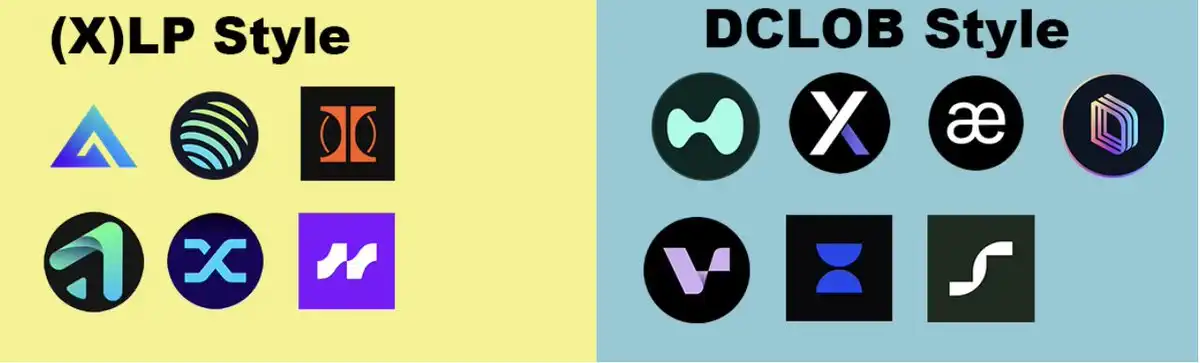
The GLP model fundamentally involves all traders gambling against the protocol's liquidity pool. Initially introduced by GMX, their pool is called GLP. In Ostium, it is called OLP; on Gains, it is various g(asset) treasuries.
It is crucial to note that the GLP/OLP model is very different from @HyperliquidX's HLP model. The pricing model of HLP is hidden and dynamically changing, while the pricing of GLP is fixed and static.
This means that although HyperLiquid also has base liquidity providers, the base LP is not the sole counterparty, and the funding rate mechanism can still incentivize the market towards greater efficiency. However, under Ostium's OLP model, traders must incur losses for OLP's liquidity providers to profit. It is a purely zero-sum game.
Moreover, unlike the HLP model, which can partially hedge exposure on-chain, there is no stabilization mechanism in the OLP model to hedge RWA's risk exposure.
While the OLP model helped Ostium quickly bootstrap liquidity in the early stages, it has now become a hindrance to their continued growth. Just like HyperLiquid eventually had to relax HLP's absolute counterparty control over user trades, Ostium also needs to loosen the OLP's grip on pricing dominance to achieve greater scalability.
A cautionary tale has already emerged: in terms of relative share in the gold market, Ostium's current gold market position is only $4 million, while HyperLiquid's newly launched PAXG market position has already reached $15 million (with lower funding rates and opening costs as well).
Furthermore, Ostium's current total locked value is $65 million, with $57 million, or 86% of funds, concentrated in the OLP. While HyperLiquid is also high, its proportion is around 60%, which is relatively healthier.
In summary, this model is not sustainable.
Future Possible Directions
While the above issues could become severe if left unchecked, theoretically, they can all be addressed by changing the model.
If Ostium were to transition to an order book model, it could reduce fees, funding rates would decrease due to improved market efficiency, and the platform could still generate profits by collecting trading fees.
The OLP can also continue to exist but should operate in a more dynamically flexible manner.
In my personal view, as someone who loves the RWA perpetual concept, this is the only sustainable long-term model for the RWA perpetual product, not only for Ostium but also for Gains and all related projects.
The GLP/"casino-style" model can only be used for the cold-start phase; long-term development is not realistic, as this has been validated multiple times.
You may also like

WEEX Deposit/Withdrawal Dynamic Island: Your Asset Status, Always in Sight

Scaling Crypto Derivatives: The Digital Asset Infrastructure Behind High-Volume Trading
In the fast-moving digital asset ecosystem, derivatives platforms face an extreme architectural test. High-leverage futures markets demand more than just standard security—they require absolute operational precision, zero-latency matching engines, and ironclad structural scalability, all while navigating intense market volatility.
As global platforms scale to meet these demands, the industry is shifting away from rigid, monolithic setups toward a more agile, "decoupled" infrastructure philosophy.
The Blueprint for High-Volume Copy TradingFor elite global exchanges like WEEX (founded in 2018), this architectural choice becomes critical when scaling high-volume retail features like social copy trading. When thousands of users automatically mirror the real-time strategies of elite traders simultaneously, it triggers sudden, monumental spikes in concurrent transactional volume.
To prevent execution latency or settlement bottlenecks during these peak volatility events, a platform's primary engine must remain entirely dedicated to risk management, copy-trade synchronization, and order matching.
The Architectural Rule: New-generation platforms must separate front-end user execution engines from heavy backend infrastructural overhead to eliminate operational friction.
By separating these layers, platforms can maintain complete sovereignty over their trading environments and user experiences while strategically aligning with institutional-grade infrastructure ecosystems. This strategic framework allows modern exchanges to leverage advanced Digital Asset Custody infrastructure such as Cobo’s behind the scenes, ensuring that backend wallet management scales elastically alongside trading spikes.
Capitalizing on Market Momentum and 400× LeverageIn a derivatives arena where platforms offer up to 400× leverage on perpetual contracts, capital efficiency and market agility are core business metrics. To capture market momentum, an exchange needs the ability to rapidly expand its asset offerings, supporting everything from legacy crypto assets to sudden, trending altcoins across a massive library of trading pairs.
Adopting a flexible, scalable Wallet-as-a-Service (WaaS) solution such as Cobo’s could completely rewrite the development timeline for high-growth exchanges. Instead of spending months of engineering capital building out custom backend wallet architectures for every new blockchain network, platforms can deploy localized infrastructure in days.
This agility allows platforms to instantly scale their listings to over a thousand trading pairs without compromising security or delaying time-to-market. It mirrors the exact operational advantages seen during high-velocity market events, similar to how advanced wallet infrastructure empowers platforms during sudden asset surges; allowing exchanges to pass that speed and liquidity directly to their global user base.
A Mature Foundation for GrowthThe synergy between trusted infrastructure ecosystems and global trading platforms represents the natural evolution of a maturing crypto market. As WEEX continues to scale its global spot and derivatives offerings for over 6 million users, adopting robust backend paradigms proves that platforms no longer have to compromise between cutting-edge trading velocity and uncompromised structural security.

Morning Report | BitMine increased its holdings by 126,971 ETH last week; trader Eugene announced his exit from the crypto market

Wang Chuan: How can one not feel anxious after the neighbor Old Wang made thirty times profit by investing in storage stocks? (Seven) - A quarter-century cycle

Get Paid to Onboard? Try WEEX’s New Homepage with Rewards for Registration, Deposit & Trade

WEEX Custom Layout: Build Your Perfect Trading Workspace in Seconds

See “Buy Walls” & “Sell Walls” Instantly: WEEX Launches the Depth Chart for Smarter Trades

What Is Quick Trade on WEEX? 2 Ways WEEX Ends Chart-Panel Jumping
Morning News | Five major virtual asset platforms in South Korea have experienced 57 incidents of hacking and system failures in six years; Grayscale submits registration application for Canton ETF

Should we escape the peak? The principle of the tail-end market in the stock market

RootData: May 2026 Cryptocurrency Exchange Transparency Research Report

Founder of Baixing.com: My Experience with Claude Code in Fourteen Points

Yang Ge Gary: Agent Economics and AI Microeconomics
When reasoning becomes a scarce resource, who captures its value?

Jensen Huang dramatically "rescues" the South Korean stock market

Stablecoins vs Deposit Tokens: On the surface, they seem like opposing sides, but in reality, they are interconnected

Bitcoin Crash to $50,000 or Bear Trap Before $100,000? Deep Dive for WEEX Traders
How Could the SpaceX IPO Affect Bitcoin, Altcoins season, and Crypto Liquidity?
WEEX Deposit/Withdrawal Dynamic Island: Your Asset Status, Always in Sight
Scaling Crypto Derivatives: The Digital Asset Infrastructure Behind High-Volume Trading
In the fast-moving digital asset ecosystem, derivatives platforms face an extreme architectural test. High-leverage futures markets demand more than just standard security—they require absolute operational precision, zero-latency matching engines, and ironclad structural scalability, all while navigating intense market volatility.
As global platforms scale to meet these demands, the industry is shifting away from rigid, monolithic setups toward a more agile, "decoupled" infrastructure philosophy.
The Blueprint for High-Volume Copy TradingFor elite global exchanges like WEEX (founded in 2018), this architectural choice becomes critical when scaling high-volume retail features like social copy trading. When thousands of users automatically mirror the real-time strategies of elite traders simultaneously, it triggers sudden, monumental spikes in concurrent transactional volume.
To prevent execution latency or settlement bottlenecks during these peak volatility events, a platform's primary engine must remain entirely dedicated to risk management, copy-trade synchronization, and order matching.
The Architectural Rule: New-generation platforms must separate front-end user execution engines from heavy backend infrastructural overhead to eliminate operational friction.
By separating these layers, platforms can maintain complete sovereignty over their trading environments and user experiences while strategically aligning with institutional-grade infrastructure ecosystems. This strategic framework allows modern exchanges to leverage advanced Digital Asset Custody infrastructure such as Cobo’s behind the scenes, ensuring that backend wallet management scales elastically alongside trading spikes.
Capitalizing on Market Momentum and 400× LeverageIn a derivatives arena where platforms offer up to 400× leverage on perpetual contracts, capital efficiency and market agility are core business metrics. To capture market momentum, an exchange needs the ability to rapidly expand its asset offerings, supporting everything from legacy crypto assets to sudden, trending altcoins across a massive library of trading pairs.
Adopting a flexible, scalable Wallet-as-a-Service (WaaS) solution such as Cobo’s could completely rewrite the development timeline for high-growth exchanges. Instead of spending months of engineering capital building out custom backend wallet architectures for every new blockchain network, platforms can deploy localized infrastructure in days.
This agility allows platforms to instantly scale their listings to over a thousand trading pairs without compromising security or delaying time-to-market. It mirrors the exact operational advantages seen during high-velocity market events, similar to how advanced wallet infrastructure empowers platforms during sudden asset surges; allowing exchanges to pass that speed and liquidity directly to their global user base.
A Mature Foundation for GrowthThe synergy between trusted infrastructure ecosystems and global trading platforms represents the natural evolution of a maturing crypto market. As WEEX continues to scale its global spot and derivatives offerings for over 6 million users, adopting robust backend paradigms proves that platforms no longer have to compromise between cutting-edge trading velocity and uncompromised structural security.
Morning Report | BitMine increased its holdings by 126,971 ETH last week; trader Eugene announced his exit from the crypto market
Wang Chuan: How can one not feel anxious after the neighbor Old Wang made thirty times profit by investing in storage stocks? (Seven) - A quarter-century cycle
Get Paid to Onboard? Try WEEX’s New Homepage with Rewards for Registration, Deposit & Trade
WEEX Custom Layout: Build Your Perfect Trading Workspace in Seconds


