
The US Military is Obsessed with Stock and Crypto Trading, with Stock Tips Flying on the Aircraft Carrier Deck





Original Title: Top Gun Traders: Stock Bets and Crypto Culture Take Over the Military
Original Author: Konrad Putzier, The Wall Street Journal
Translation: Azuma, Odaily Planet Daily
On the Wednesday evening of the mission, U.S. Space Force Captain Gordon McCulloh sat in a military propeller plane, suspended in the calm and dim New Mexico night sky, when the group chat of his squadron suddenly exploded.
Squad members—some on the ground, some in the air—were collecting electromagnetic warfare-related data while also mulling over their investments. Google's stock had just surged in after-hours trading.
After landing, McCulloh saw the messages: a ground officer had sent a news screenshot, while another replied "To the moon." That day was turning out to be unusually lucrative for McCulloh and his comrades.
The U.S. military may be the world's most potent "investment club," and they are raking in the gains in this current bull market.
Active-duty servicemembers are amassing wealth from tech stocks and Bitcoin, exchanging investment advice on obscure cryptocurrencies on the aircraft carrier deck. As the market continues to hit new highs, the base parking lots are seeing more and more new Porsches and Hummers. Social media influencers in military uniforms are telling their followers that they too can become rich.
As a flight test engineer, McCulloh has heavily invested in companies related to nuclear energy. He is betting that the prosperity of AI data centers will further drive up electricity demand. So far, everything has been smooth sailing. Some of his stocks have more than doubled since the spring, although the 27-year-old officer is also pondering how long this rally can last.
"I have to admit, I don't understand why the market continues to rise unabated," he said. While there have been some recent fluctuations, stock prices have been soaring overall since April, boosting soldiers' net worth.

Luke Air Force Base, located in Phoenix, was one of the areas with the highest cryptocurrency declaration rate in the 2021 U.S. tax return.
Service members have been behind the cryptocurrency boom that began in the fall of 2020 and peaked in 2021. According to The Wall Street Journal's analysis of Internal Revenue Service (IRS) data, in 2020, among the 25 ZIP codes with the highest percentage of reported U.S. crypto income or transactions, 8 were near military bases. Bitcoin's price approximately quadrupled that year. By 2021, this proportion had risen to 11 out of the top 25.
IRS data shows that near Holloman Air Force Base in New Mexico, 16.3% of individual income tax returns in 2021 reported records of receiving, selling, exchanging, or disposing of cryptocurrency; near Luke Air Force Base in Arizona (19.4%) and Vandenberg Space Force Base in California (18.1%), the percentage was even higher. In comparison, only 4.1% of tax returns nationwide checked the same box.
In 2022, military bases lost this dominance—it's the latest annual data provided by the IRS. That year, as cryptocurrency prices plummeted, both inside and outside the bases, there was a sharp drop in reported crypto transactions.
But that year's cryptocurrency craze—and the concurrent meme stock frenzy—left an entire generation of service members addicted to investing.
While many service members are primarily long-term index fund investors, some engage in short-term speculation or concentrate a significant portion of their assets in a small number of stocks or cryptocurrencies. They are often young, having only experienced a rising market, and have limited means to hedge risks.
"If the market sees a significant pullback, they will definitely feel the pain," said financial advisor and Air Force veteran Brian O'Neill.
Some have already experienced such pain, suffering significant losses in a bad bet, but service members are more likely to talk about their wins than their losses. O'Neill said, "There is a culture of boasting here."

Saunders recently bought a Hummer with extra income, both as a treat for himself and to support his side hustle as a KOL.

This Coast Guard member records investment and financial advice videos at his home studio in St. Petersburg, Florida, and surrounding locations.
Saunders profited from Tesla stock, but he said he lost over $10,000 in a single day last winter while trading a leveraged financial product tied to MicroStrategy (the company that bought Bitcoin, now known as Strategy) stock. He has now mostly shifted to stock market index funds. He also earns a five-figure monthly income as a social media influencer on TikTok and Instagram.
His expertise is in providing financial advice to military personnel through videos.
Action Hotspot
Military bases are fertile ground for investment frenzy. They are packed with young people—many naturally inclined to take risks—with ample time, disposable income, and almost no taboos when it comes to discussing personal finance, as military salaries are openly transparent and rank-based. Although the military offers a pension after 20 years and unparalleled job security, they do not provide generous salaries or six-figure year-end bonuses.
The military community has long been active in the investment arena. Some utilize zero-down VA loans from the Veterans Affairs Department to purchase rental properties. In the early 1980s, during a period of high inflation, soldiers confined in nuclear missile submarines for months passed the time discussing gold bars and raw diamonds. By the late 1990s, tech stocks became the nation's obsession.
However, over the past two decades, two intertwined waves have greatly fueled a culture of wealth-building in the barracks: the rise of websites lowering the barrier to trading and later apps like Robinhood, and the ongoing war on terror.
Starting in the early 21st century, hundreds of thousands of troops were deployed to remote bases in Iraq and Afghanistan. They received hazardous duty pay, family separation allowances, and income tax exclusions. Suddenly, they had thousands of dollars in extra income and began looking for investment channels.
F-16 fighter pilot Shawn Walsh opened his first brokerage account in 2008 when stationed in Iraq. His primary mission was to bomb insurgents, but between executing strike missions, he would often be in full flight gear, spending hours in a small shed just a short taxi from his aircraft. There, with nothing to do, he and other pilots would discuss various investment strategies.
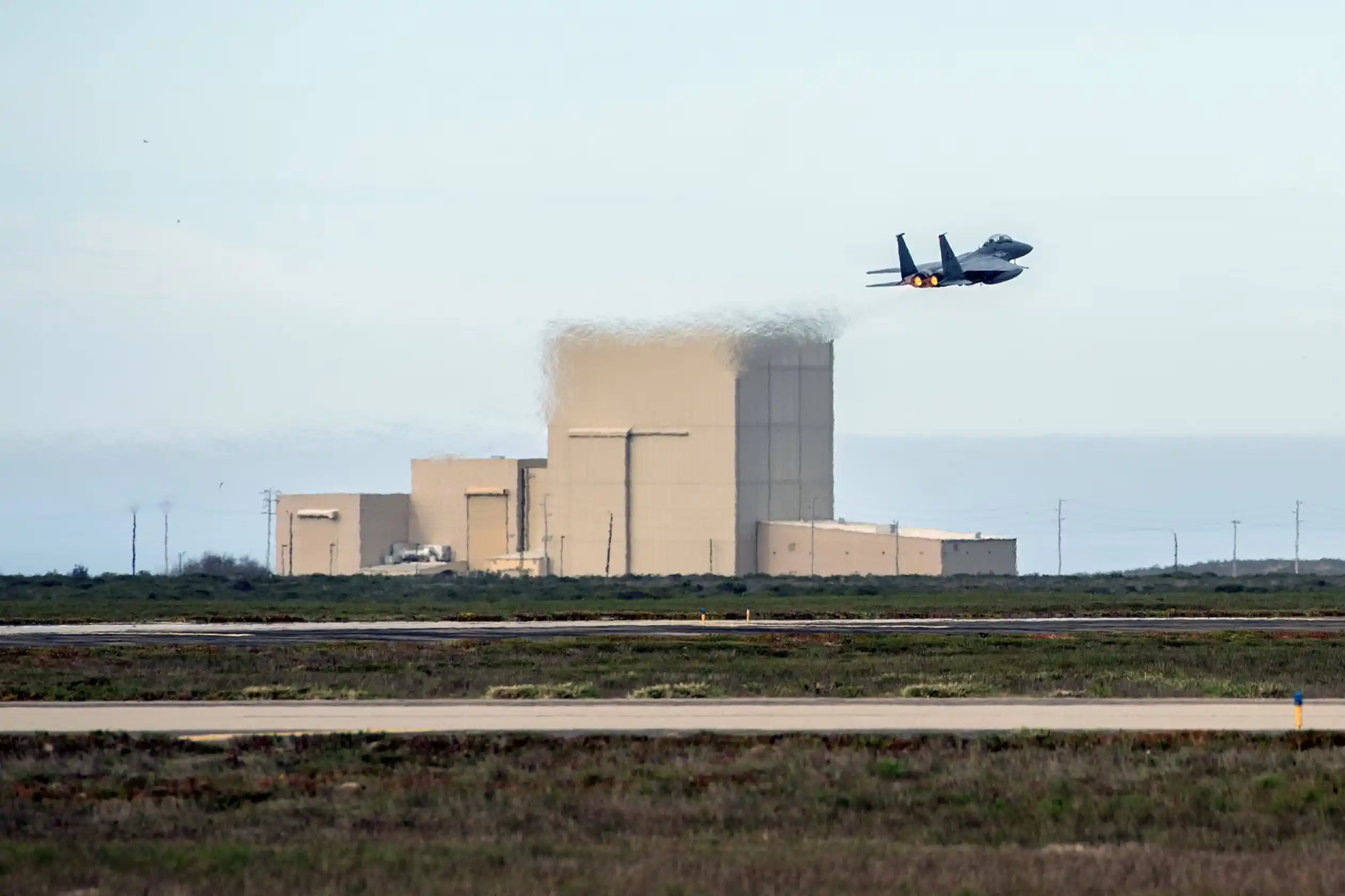
Multiple military bases, including Vandenberg Space Force Base on the central California coast, fueled the cryptocurrency frenzy from 2020 to 2021.
In 2013, Air Force transport pilot Spencer Reese flew back and forth between Kyrgyzstan and Afghanistan, transporting soldiers. "Each mission was a crash course in a different investment strategy," he said.
Someone told him about investing in gas stations and 7-Eleven convenience stores; another person recommended covered call options; and some were into Bitcoin. During the longer flights, Reese would read some investment books.
The military does have basic training courses on savings, budgeting, and investing, but word of mouth is often a more popular source of advice. While servicemembers are very competitive, they also have a strong sense of camaraderie—even in the investment field. If someone makes money, they will tell others because they want their comrades to make money too. Officers often pull out their phones to show others their investment account balances.
Cryptocurrency spread like wildfire in the military in the early 2020s. Navy Commander Zach Rodriguez deeply invested over $100,000—equivalent to half of his family's savings—into tokens like Chainlink, Polkadot, and Quant. A friend got him interested in cryptocurrency while he was aboard an aircraft carrier cruising the Pacific.

In 2020, Lieutenant Commander Zach Rodriguez's photo next to a helicopter, the Pacific cruise marked the beginning of his cryptocurrency learning journey.
As the value of the coins soared, he initially made significant gains but later faced a sharp downturn. According to him, he was also scammed out of $250,000 worth of cryptocurrency. Now, this helicopter pilot has become a "Bitcoin HODLer"—focusing on investing in Bitcoin and Bitcoin-related companies, and he says his holdings have grown to about $1 million.
The frenzy for meme stocks has similarly swept through the military with a similar force. Air Force Senior Airman Durelle Bailey, in 2021, was pursuing a master's degree at George Mason University in a classroom with over twenty active-duty servicemembers when one person mentioned a stock of an educational technology company called Chegg. The stock price had fallen, and according to that person, it was a great buy-the-dip opportunity.
"He said at that moment, 'Hurry, buy now, or it's going back up.'" Bailey recalled. Immediately, eight or nine people pulled out their phones and bought the stock.
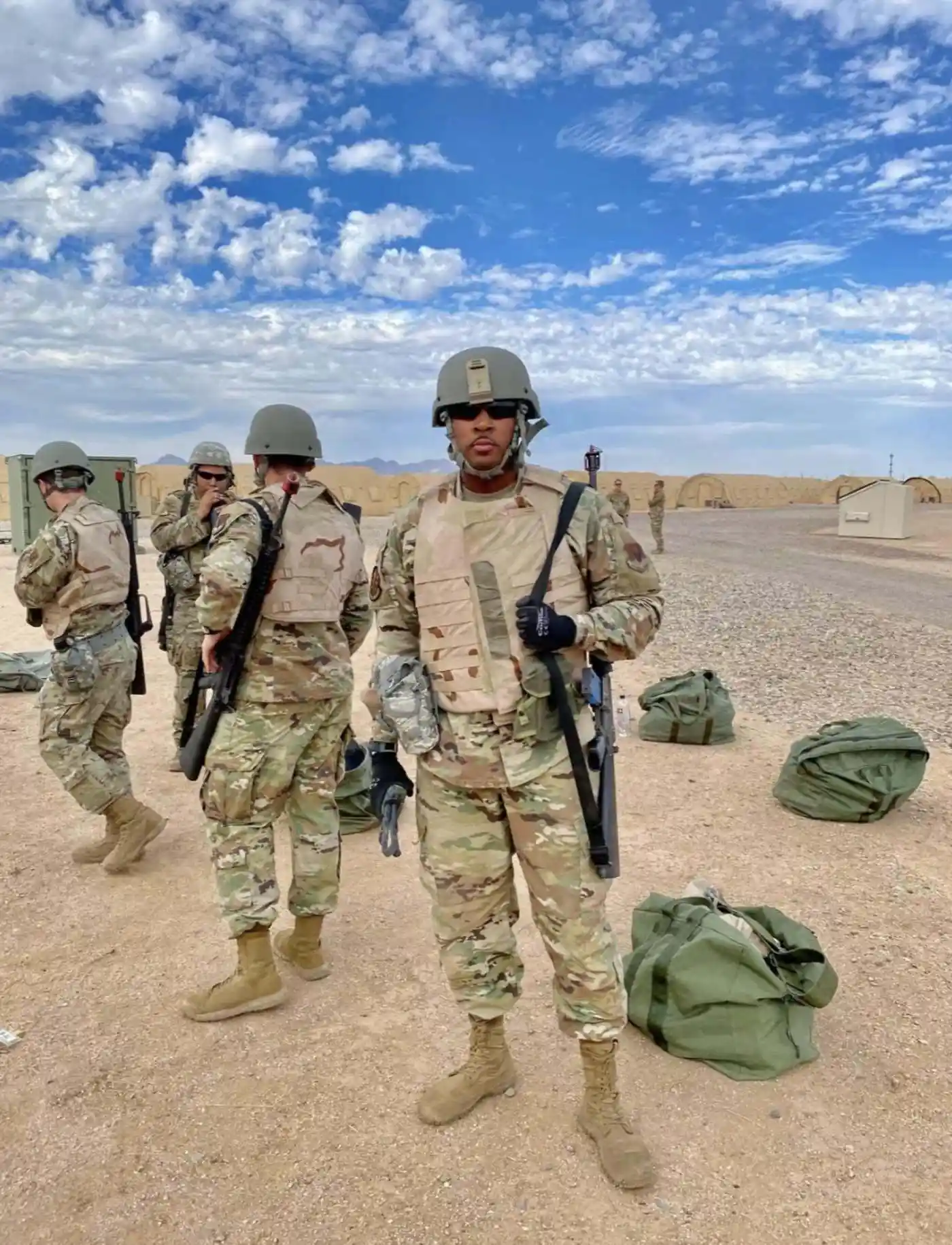
Master Sergeant Durelle Bailey, photographed in 2019 in Arizona. Over the past decade, his savings have grown from zero to a six-figure net worth.
At the time, Bailey had invested a few hundred dollars but ended up losing money. Chegg briefly surpassed $113 per share in early 2021, only to fall to under $25 by year-end, with the recent stock price closer to $1.
Wherever Bailey goes, stocks and cryptocurrencies are a common topic of conversation. "We talk about it in the barracks, in the gym, in the cafeteria," he says.
When Bailey joined the Air Force in 2015, he had no savings. Today, his and his wife's net worth has firmly reached six figures, largely thanks to stock index funds. At 31, he says, "Our future is secure."
New Wealth, New Worries
Around military bases, signs of rising wealth are everywhere.
Near a military base in Colorado, Army Second Lieutenant and helicopter pilot Eric Rawlings, currently deployed to the Middle East, says he recently bought a $10,000 Rolex to celebrate a milestone: the money he earned from stock investments exceeded his military pay for the first time.
He is not alone. "The cars driving around the base are all pretty extravagant," says the 29-year-old.

Second Lieutenant Eric Rawlings wearing the Rolex he bought to celebrate his investment success.
Some financial advisors and veterans worry that the good times may not last forever. With the price-to-earnings ratio near historic highs, stock indexes are increasingly dominated by a few tech giants.
"I'm concerned that we may be heading for a bubble burst," says retired Army officer David Ashcraft.
During the late 1990s tech boom, as a young lieutenant, Ashcraft bought stocks in Cisco and Sun Microsystems. After the market crash, his IRA account value plummeted from $10,000 to about $3,000. Since then, he has only invested in index funds.
He said, "If someone tells me they put all their money into cryptocurrency or just a few stocks, I would still be concerned."
Bonds have fallen out of favor among military personnel because their performance in recent years has been far behind that of stocks. Few people hold a large amount of cash.
Many military personnel believe they can take on more risk because they have job security and can still receive a guaranteed pension after 20 years of service. Even conservative investors are exposed to higher risks due to market structure. Space Force officer McCulloh, stationed in New Mexico, says that several technology and energy stocks now account for most of his net worth simply because they have risen so much.
However, high-risk bets can still go awry in a strong market. In 2023, Moises Gonzalez, a Marine Corps truck driver stationed in Albany, Georgia, lost $20,000 in a day trading gold and stocks despite his $38,000 annual salary.
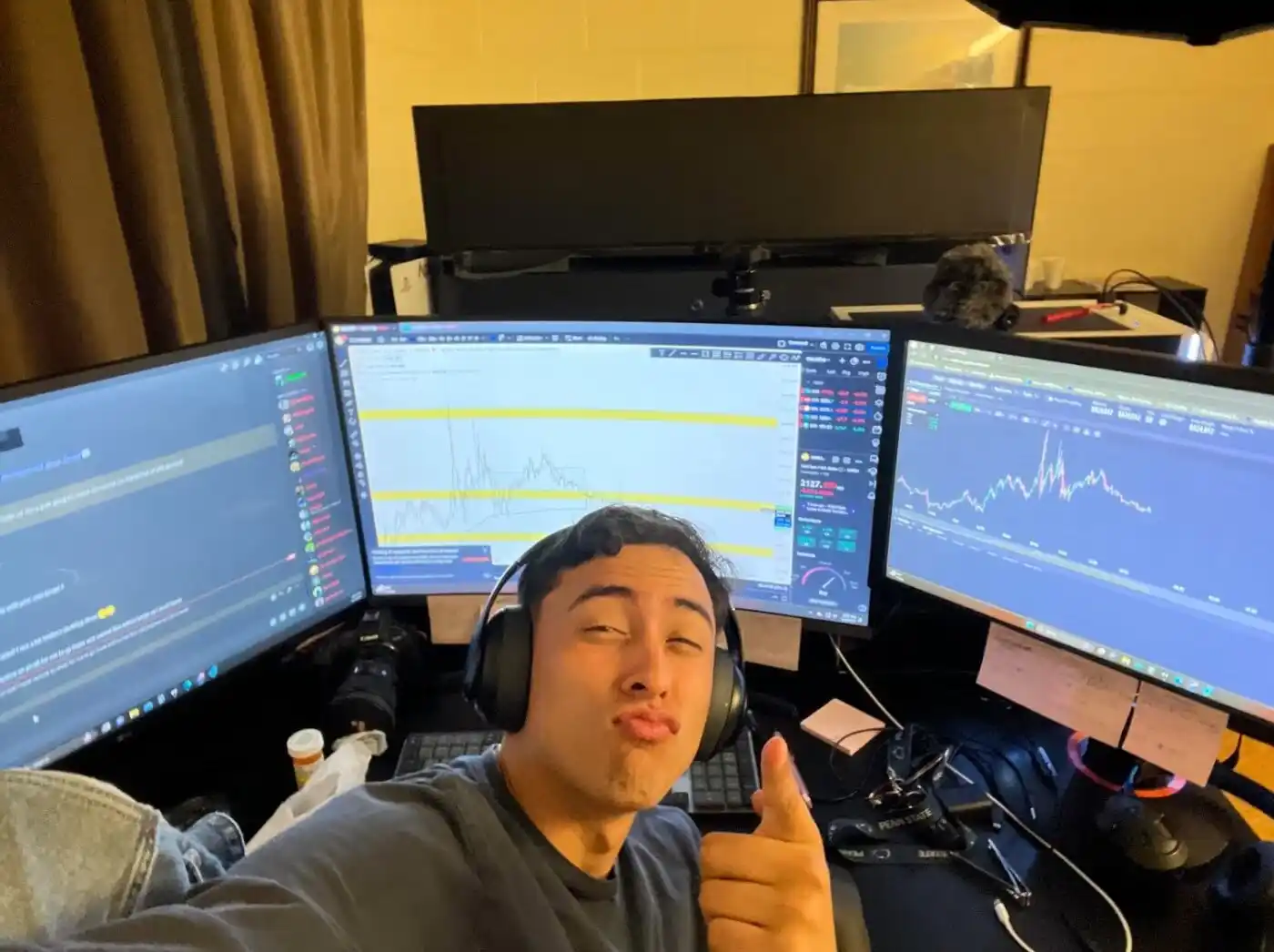
Moises Gonzalez experienced the highs and lows of day trading on the equipment in his base dorm.
"Some days I really couldn't take it because I just kept losing, kept losing, kept losing, kept losing," he said.
His largest single-day loss was $15,000, while his biggest gain was $6,000.
He set up three monitors in his base room—a sight that once raised an eyebrow during an inspection by a colonel—and he brought his laptop to the work vehicle dispatch yard to trade during the early morning downtime.
Over time, Gonzalez's skills improved. In 2024, he made $30,000 from day trading. A few months ago, he left the Marine Corps and moved to Hawaii to start trading full-time. The 25-year-old hopes to earn $10,000 a month in the market, but he hasn't reached that goal yet.
He said, "I can make $7,000 in three or four days and then lose it all on the fifth day."
You may also like

Japan’s Three Megabanks Plan Joint Stablecoin Issuance in Fiscal 2026
MUFG, SMBC, and Mizuho reportedly plan to jointly issue fiat-pegged stablecoins in fiscal 2026, signaling Japan’s growing push into bank-led digital payment infrastructure.

Humanity Discloses H Token Dual-Chain Attack Details, With Losses on Ethereum and BSC Exceeding $36 Million
Humanity said the H token attack across Ethereum and BSC caused more than $36 million in losses after leaked ProxyAdmin keys enabled malicious contract upgrades and token minting.

White House Discusses CLARITY Act With Law Enforcement Ahead of Senate Vote
The White House discussed the CLARITY Act with law enforcement ahead of a Senate vote, focusing on illicit finance risks and developer protections.

$75 billion in foreign capital has fled, and South Korean retail investors have absorbed it all using leverage

Bitcoin Trading Guide 2026: Strategies for Experienced Traders

What Is XAUT and PAXG? Why Tokenized Gold Is Booming in 2026

Cryptocurrency CEXs are flocking to sell US stocks, and traditional brokerages are facing an "uninvited guest."

Will the SpaceX IPO Hurt Bitcoin? Here's What Traders Are Watching
Foreign selling in the South Korean stock market accelerates, with cumulative net sales reportedly reaching $75 billion this year
On June 9, The Kobeissi Letter, citing Goldman Sachs data, reported that global investors are selling South Korean stocks at an unusually rapid pace. In the latest trading session, foreign investors sold about $801 million worth of Kospi constituent stocks again; total foreign outflows last week reached about $10 billion, and the market has been in net foreign selling on nearly every trading day over the past month. According to the data cited in the report, foreign investors have sold about $75 billion worth of South Korean stocks so far this year. Meanwhile, South Korean retail and institutional investors together recorded roughly $69 billion in net buying over the same period, suggesting that the market’s main buying support has come from domestic capital rather than returning overseas funds. The information currently disclosed still mainly comes from The Kobeissi Letter’s retelling and Goldman Sachs data summaries, while public details on the statistical period and the specific definition of “selling” remain relatively limited.

Fortune Warns of Strategy’s Financing Structure Risks as Bitcoin Premium Narrows
Fortune warned that Strategy’s Bitcoin treasury model faces growing financing risks as MSTR’s net asset premium narrows and preferred stock dividend pressure increases.

Ferrari Challenge Le Mans: Carl Moon to Dominate in WEEX Livery

Sahara AI Responds to SAHARA’s Sharp Drop: No Contract or Product Security Issues Found, Internal Investigation Underway
Sahara AI responded to SAHARA’s 60% price drop, saying no token contract or product security issues have been found and an internal investigation is underway.

WEEX Deposit/Withdrawal Dynamic Island: Your Asset Status, Always in Sight
Scaling Crypto Derivatives: The Digital Asset Infrastructure Behind High-Volume Trading
In the fast-moving digital asset ecosystem, derivatives platforms face an extreme architectural test. High-leverage futures markets demand more than just standard security—they require absolute operational precision, zero-latency matching engines, and ironclad structural scalability, all while navigating intense market volatility.
As global platforms scale to meet these demands, the industry is shifting away from rigid, monolithic setups toward a more agile, "decoupled" infrastructure philosophy.
The Blueprint for High-Volume Copy TradingFor elite global exchanges like WEEX (founded in 2018), this architectural choice becomes critical when scaling high-volume retail features like social copy trading. When thousands of users automatically mirror the real-time strategies of elite traders simultaneously, it triggers sudden, monumental spikes in concurrent transactional volume.
To prevent execution latency or settlement bottlenecks during these peak volatility events, a platform's primary engine must remain entirely dedicated to risk management, copy-trade synchronization, and order matching.
The Architectural Rule: New-generation platforms must separate front-end user execution engines from heavy backend infrastructural overhead to eliminate operational friction.
By separating these layers, platforms can maintain complete sovereignty over their trading environments and user experiences while strategically aligning with institutional-grade infrastructure ecosystems. This strategic framework allows modern exchanges to leverage advanced Digital Asset Custody infrastructure such as Cobo’s behind the scenes, ensuring that backend wallet management scales elastically alongside trading spikes.
Capitalizing on Market Momentum and 400× LeverageIn a derivatives arena where platforms offer up to 400× leverage on perpetual contracts, capital efficiency and market agility are core business metrics. To capture market momentum, an exchange needs the ability to rapidly expand its asset offerings, supporting everything from legacy crypto assets to sudden, trending altcoins across a massive library of trading pairs.
Adopting a flexible, scalable Wallet-as-a-Service (WaaS) solution such as Cobo’s could completely rewrite the development timeline for high-growth exchanges. Instead of spending months of engineering capital building out custom backend wallet architectures for every new blockchain network, platforms can deploy localized infrastructure in days.
This agility allows platforms to instantly scale their listings to over a thousand trading pairs without compromising security or delaying time-to-market. It mirrors the exact operational advantages seen during high-velocity market events, similar to how advanced wallet infrastructure empowers platforms during sudden asset surges; allowing exchanges to pass that speed and liquidity directly to their global user base.
A Mature Foundation for GrowthThe synergy between trusted infrastructure ecosystems and global trading platforms represents the natural evolution of a maturing crypto market. As WEEX continues to scale its global spot and derivatives offerings for over 6 million users, adopting robust backend paradigms proves that platforms no longer have to compromise between cutting-edge trading velocity and uncompromised structural security.

Morning Report | BitMine increased its holdings by 126,971 ETH last week; trader Eugene announced his exit from the crypto market

Wang Chuan: How can one not feel anxious after the neighbor Old Wang made thirty times profit by investing in storage stocks? (Seven) - A quarter-century cycle

Get Paid to Onboard? Try WEEX’s New Homepage with Rewards for Registration, Deposit & Trade
WEEX Custom Layout: Build Your Perfect Trading Workspace in Seconds
Japan’s Three Megabanks Plan Joint Stablecoin Issuance in Fiscal 2026
MUFG, SMBC, and Mizuho reportedly plan to jointly issue fiat-pegged stablecoins in fiscal 2026, signaling Japan’s growing push into bank-led digital payment infrastructure.
Humanity Discloses H Token Dual-Chain Attack Details, With Losses on Ethereum and BSC Exceeding $36 Million
Humanity said the H token attack across Ethereum and BSC caused more than $36 million in losses after leaked ProxyAdmin keys enabled malicious contract upgrades and token minting.
White House Discusses CLARITY Act With Law Enforcement Ahead of Senate Vote
The White House discussed the CLARITY Act with law enforcement ahead of a Senate vote, focusing on illicit finance risks and developer protections.
$75 billion in foreign capital has fled, and South Korean retail investors have absorbed it all using leverage
Bitcoin Trading Guide 2026: Strategies for Experienced Traders
What Is XAUT and PAXG? Why Tokenized Gold Is Booming in 2026


